
CBD OC wellness solutions refer to over-the-counter cannabidiol products formulated to support everyday mental and physical health without a prescription. In 2026, these accessible products span oils, capsules, topicals, and edibles designed to address stress, sleep disruption, mild pain, and focus challenges, particularly among creative professionals and knowledge workers seeking non-impairing alternatives to conventional pharmaceuticals. The appeal is clear: cannabidiol (CBD) works through the endocannabinoid system to modulate inflammation, neurotransmitter release, and stress response, all without the psychoactive effects of tetrahydrocannabinol (THC). Yet the science remains more nuanced than marketing suggests, and choosing effective, safe products demands literacy in sourcing, third-party testing, and realistic expectations.
The surge in OC wellness CBD reflects both expanded legal access in North America, especially Canada, and growing awareness of CBD oil basics. But the category is crowded and inconsistently regulated. Potency can vary by orders of magnitude, labels often mislead, and most therapeutic claims rest on preclinical or small-scale human trials rather than robust clinical evidence. For users navigating chronic stress, creative blocks, or recovery demands, this matters. The difference between placebo and perceptible benefit often hinges on bioavailability, dosing precision, and cannabinoid profile.
This article unpacks the evidence behind CBD OC wellness solutions, identifies what works and what remains uncertain, and delivers practical guidance on product selection, dosing strategies, safety considerations, and when to consult a healthcare provider. Whether you’re a designer managing deadline anxiety or a caregiver exploring cannabinoid support, the goal is harm reduction and informed choice grounded in current science.
What Are CBD OC Wellness Solutions?
CBD OC wellness solutions are over-the-counter cannabidiol products formulated for everyday wellness support without a prescription or doctor’s authorization. OC stands for “over-the-counter,” meaning these products are legally sold in retail stores, pharmacies, and online platforms across Canada and much of North America as of 2026. Unlike prescription cannabinoids or medical cannabis accessed through healthcare providers, CBD OC products target general wellness goals like stress management, sleep quality, and physical recovery rather than diagnosed medical conditions.
The cannabidiol in these products comes from hemp or cannabis plants but contains minimal to no tetrahydrocannabinol (THC), the compound that produces intoxication. This makes CBD OC solutions appealing to creative professionals who want potential wellness benefits without cognitive impairment or legal risk. Many users also explore functional mushroom blends alongside CBD as part of a broader plant-based wellness routine.
- CBD Isolate
- Pure cannabidiol with all other plant compounds removed. Contains 99%+ CBD and no THC, terpenes, or flavonoids.
- Broad-Spectrum
- Contains CBD plus other beneficial cannabinoids, terpenes, and plant compounds, but with THC fully removed. Offers some entourage effect without THC exposure.
- Full-Spectrum
- Includes CBD alongside the full range of cannabinoids, terpenes, and plant compounds naturally present in hemp, including trace THC within legal limits. May provide the strongest entourage effect.
- THC Limit (0.3%)
- The maximum tetrahydrocannabinol concentration allowed in hemp-derived products under federal law in Canada and the U.S. This threshold keeps products non-intoxicating and legally distinct from cannabis.
- Entourage Effect
- The theory that cannabinoids, terpenes, and other plant compounds work synergistically to enhance therapeutic effects when taken together rather than in isolation.
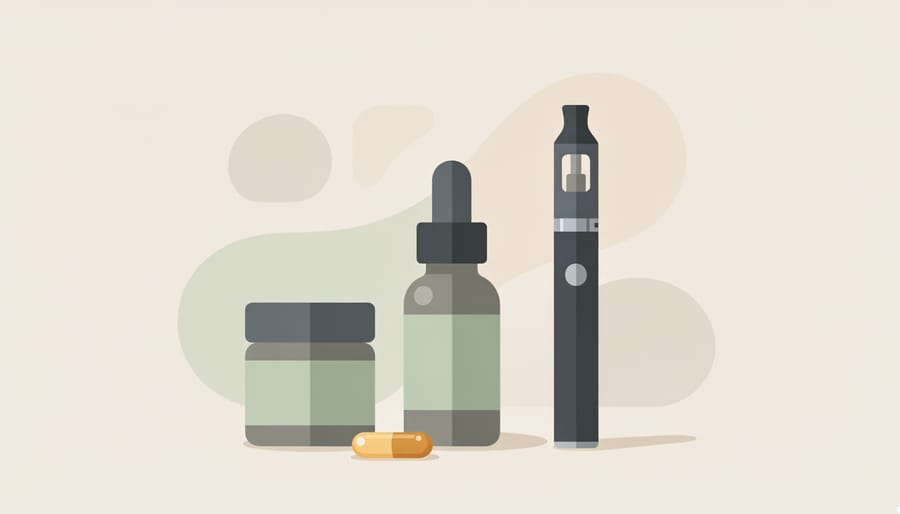
You will find CBD OC products in several formats. Tinctures are liquid extracts taken sublingually under the tongue for faster absorption, typically offering flexible dosing with a dropper. Capsules and softgels provide pre-measured doses for consistency and convenience. Topicals like creams, balms, and lotions are applied directly to skin for localized effects without entering the bloodstream. Gummies and edibles deliver CBD in familiar, portable forms with longer-lasting effects due to digestion. Beverages infused with CBD, from sparkling waters to coffee, blend wellness with routine hydration or social rituals.
In Canada as of 2026, CBD products derived from cannabis are regulated under the Cannabis Act and sold through licensed retailers, while hemp-derived CBD with 0.3% THC or less follows separate regulations under the Industrial Hemp Regulations. Licensed products must display standardized packaging, Health Canada warnings, and accurate cannabinoid content. In the U.S., the 2018 Farm Bill legalized hemp-derived CBD at the federal level with the 0.3% THC threshold, but state laws vary and FDA oversight remains limited, making third-party lab testing essential. Labels must disclose total CBD and THC per serving, ingredient lists, and batch numbers linking to certificates of analysis. Products making unapproved health claims or exceeding THC limits risk regulatory action.
Why Creative Professionals Turn to CBD
Creative work demands sustained mental effort, openness to risk, and the ability to perform under scrutiny, a combination that takes a toll on wellbeing. Artists, writers, designers, and other creative professionals navigate a unique set of stressors that conventional wellness advice often overlooks. Understanding these challenges helps explain why many are exploring CBD OC wellness solutions as a complement to their self-care routines.
Performance anxiety ranks high. Whether pitching to clients, presenting work, or collaborating in real time, creatives face frequent evaluation. The pressure to produce original ideas on demand can trigger rumination and self-doubt. Unlike stage fright that comes and goes, many creatives describe a persistent hum of anxiety that colors their workday, worrying whether the concept is strong enough, the deadline realistic, or the critique fair.
Creative blocks compound the stress. When ideas won’t flow or a project stalls, the resulting frustration can spiral into burnout. Irregular schedules make this worse: freelancers and gig workers juggle multiple projects, work late to meet deadlines, and struggle to maintain consistent sleep and meal patterns. Over time, this disruption erodes resilience and amplifies stress.
Social anxiety in collaborative settings also plays a role. Brainstorming sessions, feedback meetings, and networking events require vulnerability, sharing half-formed ideas, accepting criticism, and advocating for creative vision. For introverts or those with social anxiety, these interactions drain energy and heighten self-consciousness.
CBD appeals to this population for practical reasons. It’s non-intoxicating, meaning users don’t experience euphoria, impairment, or a high. It’s legal in Canada and widely available over the counter, removing barriers faced with prescription medications or controlled substances. It’s also accessible: no doctor’s appointment required, and products fit easily into daily routines.
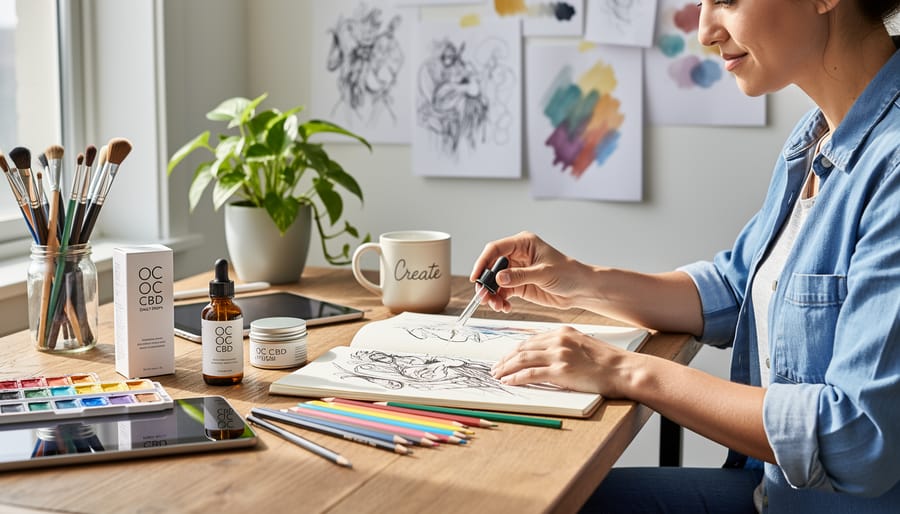
What do creatives report seeking from CBD? Most cite calmer focus, the ability to concentrate without the racing thoughts that derail deep work. Others want reduced overthinking, hoping to quiet the internal critic during creative sessions. Better sleep comes up frequently, as does improved stress resilience: the capacity to bounce back from setbacks without spiraling. These goals reflect a desire not for peak performance, but for sustainable creative practice, a baseline of calm that supports rather than forces the work.
Evidence Snapshot: CBD for Anxiety, Focus, and Sleep
The scientific case for CBD in creative wellness rests on a small but growing body of peer-reviewed research. Most studies focus on anxiety and sleep, two areas where cannabidiol shows genuine promise, while evidence for direct cognitive or creative enhancement remains thin. Here’s what the data actually support, where the gaps are, and why the doses you’ll find in most OC products may differ from what researchers have tested.
Generalized and Social Anxiety
Several placebo-controlled trials suggest CBD can reduce symptoms of generalized anxiety disorder and social anxiety, particularly in acute, high-stress situations. A 2019 study in *The Permanente Journal* found that 300-600 mg of CBD reduced anxiety scores in adults over one month, though the effect plateaued after the first assessment. Research on social anxiety disorder is more consistent: a 2011 Brazilian trial showed that 600 mg of CBD reduced anxiety, cognitive impairment, and discomfort during simulated public speaking compared to placebo. A 2019 Japanese study in *Frontiers in Psychology* reported similar results in teens with social anxiety using 300 mg daily.
These findings are promising, but there’s a catch. Most OC wellness products contain 10-50 mg of CBD per serving, far below the 300-600 mg range tested in clinical settings. Whether lower, repeated doses produce similar effects over time is an open question; some anecdotal reports and pilot studies suggest benefit, but large-scale, long-term trials are lacking.
Sleep Quality
CBD’s effects on sleep are less clear-cut. A 2019 retrospective chart review in *The Permanente Journal* found that 25-175 mg of CBD (most commonly 25 mg in capsule form) improved sleep scores in 66.7% of patients after one month, though results fluctuated over time. Smaller studies suggest CBD may help with sleep onset and duration, possibly by reducing anxiety that interferes with rest, but a 2021 systematic review in *CNS Drugs* concluded that evidence remains insufficient to recommend CBD specifically as a sleep aid. Higher doses appear more sedating, though the dose, response relationship is not well defined.
Focus and Cognitive Function
Here the evidence thins considerably. No large-scale human trials have demonstrated that CBD directly enhances focus, creativity, or cognitive performance. A 2020 review in *Psychopharmacology* noted that low-to-moderate doses of CBD (up to 600 mg) do not impair cognitive function and may improve attention under high-stress conditions, but this is not the same as enhancing baseline focus or creative output. Some preclinical studies suggest CBD may protect neurons and reduce neuroinflammation, but translating these findings to real-world creative work requires more research.
Understanding how CBD works, by modulating serotonin receptors, endocannabinoid signaling, and possibly other pathways, helps explain why effects vary so much between people and contexts. Factors like genetics, tolerance, baseline anxiety levels, and even gut health influence how you metabolize and respond to cannabidiol.
Study Quality and Placebo Effects
Many CBD studies are small, short-term, or funded by industry. Placebo effects are real and significant in wellness research, particularly for subjective outcomes like anxiety and sleep. A 2020 meta-analysis in *Neuropsychopharmacology* found moderate-quality evidence for CBD in anxiety disorders but noted high heterogeneity and a need for larger, longer trials. Don’t dismiss placebo as “fake”, expectation and context shape real physiological responses, but recognize that rigorous evidence is still evolving.
Choosing a CBD OC Product: What to Look For
Start by checking the product’s certificate of analysis. This document, generated by an independent laboratory, confirms what cannabinoids are actually in the bottle and at what concentrations. Look for CBD content that matches the label, THC levels below 0.3 percent (the legal limit in Canada and most U.S. states as of 2026), and screening for contaminants like heavy metals, pesticides, and residual solvents. Reputable brands publish fresh COAs for each batch on their websites or provide a QR code on the packaging. No COA means no accountability, skip those products.
Transparent labeling matters as much as third-party testing. The label should state total CBD per container and per serving, list all ingredients, identify the extraction method (often CO2 or ethanol), and specify whether the product is isolate, broad-spectrum, or full-spectrum. Full-spectrum products contain trace cannabinoids and terpenes that may enhance effects through the entourage effect, but they also carry minuscule THC amounts. Broad-spectrum offers a middle ground, cannabinoids and terpenes without THC, while isolate is pure CBD. Choose based on your comfort with trace THC and whether you want additional plant compounds.
Carrier oils and additives affect absorption and taste. Tinctures commonly use MCT oil, hemp seed oil, or olive oil; MCT is absorbed efficiently and has a neutral flavor. Gummies and capsules may include sweeteners, flavoring, or fillers, check for allergens and unnecessary additives. Topicals should list active ingredients and avoid parabens or synthetic fragrances if you have sensitive skin.
For creative work, format shapes usability. Tinctures allow flexible dosing, hold under your tongue for 30 seconds, adjust by the drop, and feel effects in 15 to 45 minutes. Capsules deliver consistent doses and work well for daily routines, though they take longer to kick in. Gummies taste better but dosing precision suffers if you need to split one. Topicals act locally and won’t affect your mental state, so they’re irrelevant for focus or anxiety.
Price and quality correlate loosely. Expect to pay more for organic hemp, rigorous testing, and transparent sourcing, but high cost alone doesn’t guarantee quality. Compare CBD concentration per dollar, a 30 ml tincture with 1,000 mg CBD at forty dollars offers better value than 500 mg at thirty dollars. Bulk formats and subscriptions often reduce cost.
Red flags include health claims that sound medical (“cures anxiety,” “treats insomnia”), missing or expired COAs, vague sourcing (“industrial hemp”), and buzzwords without substance. If a brand won’t tell you where the hemp was grown or how the CBD was extracted, assume poor quality control. Buy from companies that answer questions, publish testing, and follow Canadian regulations or equivalent standards in your region.
Dosing and Timing for Creative Work
Most CBD OC wellness solutions contain 5 to 50 milligrams of cannabidiol per serving, a range much lower than the 300 to 600 mg doses tested in clinical anxiety trials. For creative professionals integrating CBD into their routines, the goal is finding the minimum effective dose that supports focus, calm, or sleep without side effects.
Onset times vary by product format. Sublingual tinctures, held under the tongue for 30 to 60 seconds, typically take effect in 15 to 45 minutes. Capsules, gummies, and beverages must pass through digestion, delaying onset to one to two hours but extending duration to four to six hours. Topicals act locally and do not enter the bloodstream in meaningful amounts, so they won’t affect mood or cognition. For creative work, tinctures offer the most flexibility: you can adjust the dose drop by drop and time effects to match your work window.
Start low and track systematically. Here’s a practical protocol:
- Begin with 10 mg of CBD, preferably from a full-spectrum or broad-spectrum tincture with a certificate of analysis confirming cannabinoid content and THC below 0.3 percent.
- Wait at least two hours after dosing before deciding whether to adjust. Sublingual products peak faster, but full effects may take 90 minutes.
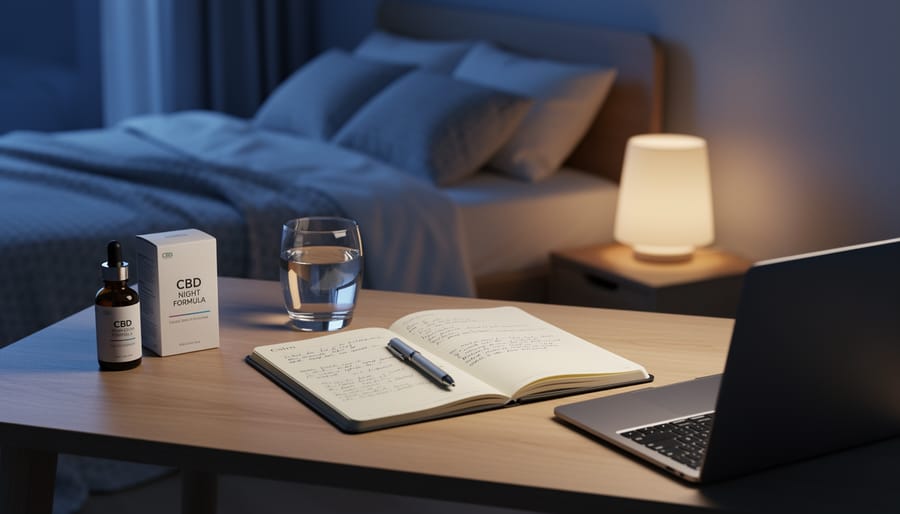
- Journal your response: note the time, dose, product format, and any changes in mood, focus, anxiety, or physical tension over the next four hours.
- If you notice no benefit after three consistent doses on separate days, increase by 5 to 10 mg. If you feel drowsy or uncomfortable, reduce the dose or try a different time of day.
- Give each dose level at least a week before making further changes. Consistency matters more than chasing immediate effects.
Timing matters. If you want CBD to support a creative session, dose 30 to 60 minutes beforehand (for tinctures) or 90 to 120 minutes (for edibles). For sleep, take it 60 to 90 minutes before bed. Avoid dosing right before driving, operating machinery, or high-stakes tasks until you know how you respond individually. CBD is not intoxicating, but it can cause drowsiness in some users, especially at higher doses or when combined with other sedating substances.
Harm-Reduction Checklist: Using CBD Safely
CBD is generally well tolerated, but responsible use means understanding potential interactions, recognizing side effects, and choosing products that meet safety standards. Creative professionals incorporating CBD OC wellness solutions into their routines should follow these evidence-based precautions.
Drug Interactions: Talk to Your Doctor First
CBD inhibits cytochrome P450 enzymes in the liver, which metabolize many medications. This can increase blood levels of certain drugs, raising the risk of side effects or toxicity. High-concern interactions include blood thinners (warfarin), sedatives (benzodiazepines, zolpidem), some antidepressants (SSRIs, tricyclics), anticonvulsants (clobazam, valproate), and statins. If you take any prescription medication, consult a healthcare provider before starting CBD. Your doctor may adjust doses or recommend monitoring.
Recognize Common Side Effects
Clinical studies report mild, dose-dependent side effects in some users: fatigue or drowsiness, diarrhea or upset stomach, changes in appetite or weight, and dry mouth. These typically resolve with dose reduction. If side effects persist or worsen, discontinue use and speak with a healthcare professional.
Pregnancy, Breastfeeding, and Age Restrictions
Avoid CBD during pregnancy and breastfeeding. Animal studies suggest potential developmental risks, and cannabinoids pass into breast milk. In Canada, legal purchase of CBD products is restricted to adults 18 and over (19 in some provinces). Parents and caregivers should store CBD products securely out of children’s reach.
Quality Control: Choose Lab-Tested Products
Contamination and mislabeling are real risks in the CBD market. Studies have found products with inaccurate CBD levels, undisclosed THC, pesticides, heavy metals, and residual solvents. Always select products with current, third-party certificates of analysis (COAs) verifying cannabinoid content and screening for contaminants. Avoid brands that cannot provide COAs or make unverified health claims.
Workplace Considerations
Full-spectrum and broad-spectrum CBD products contain trace THC (up to 0.3 percent in Canada). While unlikely to cause intoxication, repeated use may result in detectable THC metabolites on workplace drug tests. If your employer conducts screening, consider CBD isolate products (zero THC) or disclose your use in advance. Some industries with safety-sensitive roles prohibit any cannabinoid use.
Driving and Operating Machinery
CBD is non-intoxicating, but individual responses vary. Until you know how a product affects you, avoid driving, operating heavy equipment, or engaging in tasks requiring full alertness. Fatigue and drowsiness are possible, especially at higher doses or when combined with other sedatives.
CBD and Creative Wellness: Setting Realistic Expectations
CBD won’t turn you into a more creative person, and it won’t cure performance anxiety or writer’s block. Despite marketing claims and anecdotal buzz, there’s no solid evidence that cannabidiol enhances creative thinking, unlocks flow states, or directly improves artistic output. What CBD may do, for some people, is dial down the physiological noise, racing heart, churning thoughts, tension, that gets in the way of focused work. Think of it as a potential support tool, not a creative catalyst.
Many users report feeling calmer and more present after taking CBD, which can help when anxiety is blocking your ability to start a project or collaborate with others. But controlled studies show that placebo effects are real and significant, especially for subjective experiences like mood and focus. If you believe a product will help, you may feel better regardless of the active ingredient. That’s not a reason to dismiss CBD entirely, it just means keeping realistic expectations and recognizing that your routine, environment, and mindset matter just as much.
Individual responses vary widely. A 25 mg dose that mellows one person may do nothing for another, or cause drowsiness in a third. Genetics, metabolism, tolerance, and even what you ate that day all influence how CBD works for you. This variability means self-experimentation is necessary, but it also underscores why CBD shouldn’t replace proven strategies like therapy, regular sleep, exercise, or structured creative practices.
CBD fits best as one piece of a broader wellness routine. Pair it with consistent sleep hygiene, mindfulness, breaks, and harm-reduction habits, and it may support your goals. Lean on it alone, and you’re likely to be disappointed. Stay informed, stay safe, and remember that sustainable creative wellness comes from multiple sources, not a single supplement.
CBD OC wellness solutions offer creative professionals a legal, non-intoxicating route to support stress management, sleep, and creative resilience. The evidence is promising but limited, studies show cannabidiol may reduce anxiety and improve sleep at specific doses, yet most over-the-counter products contain lower amounts and research is still evolving. Quality varies widely across the market, so informed choices matter.
Start with lab-tested products that provide transparent certificates of analysis. Begin at a low dose (5-10 mg) and track how your body responds before increasing. Timing matters: sublingual tinctures work faster, edibles take longer. Remember that CBD is not a creativity drug or a substitute for therapy, medication, or healthy habits. It works best when integrated mindfully into a broader wellness routine that includes sleep hygiene, stress management, and creative practices you already know support your work.
Consult your healthcare provider before adding CBD to your routine, especially if you take prescription medications or have underlying health conditions. Some drugs interact with cannabidiol, and a quick conversation can prevent problems.
Next steps:
Check Health Canada’s cannabis regulations at for current legal standards and THC limits. Request certificates of analysis directly from brands or verify them through third-party lab websites. When talking to your doctor, bring product labels and be specific about your dose and format. For peer-reviewed research, search PubMed using terms like “cannabidiol anxiety” or “CBD sleep quality” to read studies yourself. Approach CBD as one tool among many, not a silver bullet, and prioritize safety and self-awareness as you explore what works for your creative wellness.