
Exhale Wellness THC gummies and other hemp-derived THC gummies are safe for most healthy adults when used at the right dose, but the margin between an enjoyable experience and an overwhelming one is narrow. Start with 2.5 to 5 mg of delta-9 tetrahydrocannabinol (THC), wait at least 90 to 120 minutes before redosing, and adjust only after you’ve tried the same dose on two or three separate occasions. That single protocol, backed by pharmacokinetic studies and decades of harm-reduction practice, prevents the vast majority of adverse events associated with edible cannabis.
Key Takeaway: Begin with 2.5 to 5 mg THC, wait a full 90 to 120 minutes for peak effects, and resist the urge to take more on your first session. Adjust your dose only after you’ve gathered data from multiple experiences at the same level.
The reason dosing matters so much more with edibles than with inhaled cannabis comes down to metabolism. When you swallow a gummy, THC passes through your liver and converts partly into 11-hydroxy-THC, a metabolite roughly three to seven times more potent than the original compound. Effects build slowly over 45 to 180 minutes, peak around the two-to-three-hour mark, and can last six to eight hours or longer. That delayed onset catches first-time users off guard. Many assume the gummy isn’t working and take a second dose, only to find themselves profoundly impaired an hour later.
This guide walks you through the tools you need, the safety checks that matter, a step-by-step dosing protocol, and what to do if something goes wrong. You’ll learn how to read a certificate of analysis, why body weight matters less than you think, and the harm-reduction strategies clinicians use with patients new to cannabis. Whether you picked up gummies from a dispensary or ordered them online under the 2018 Farm Bill, the principles remain the same. Precision, patience, and a respect for individual variation keep the experience therapeutic rather than distressing.
What You Need Before You Start
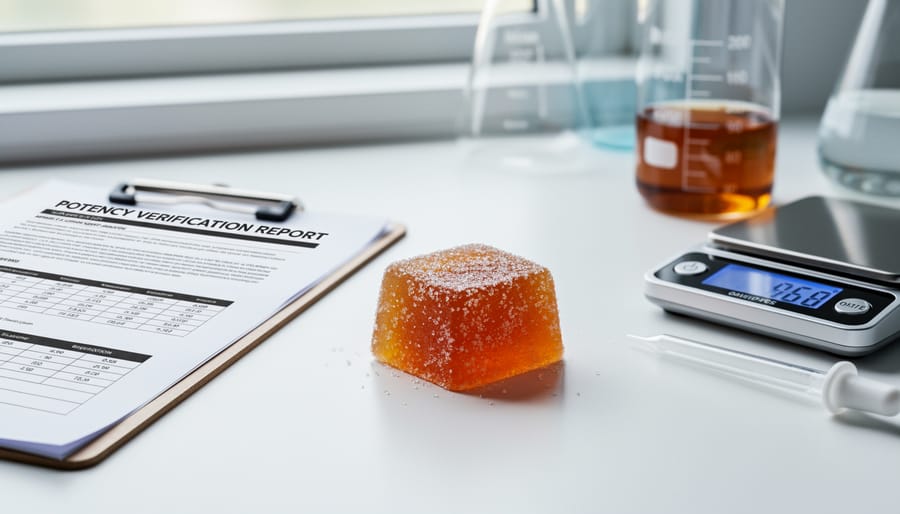
Before you take your first hemp-derived THC gummy, gather a few essential items. Having these on hand turns dosing from guesswork into a controlled, documented process, and it gives you a safety net if things don’t go as planned.
Lab-tested gummies with a Certificate of Analysis (COA). This is non-negotiable. A COA from an independent lab confirms the THC content per gummy and screens for pesticides, heavy metals, and residual solvents. Without it, you’re flying blind; gummies sold without third-party testing may contain wildly inconsistent doses or contaminants. Reputable brands post COAs on their websites or include QR codes on packaging. If you can’t find one, choose a different product.
Accurate product labeling or a milligram scale. Most commercial gummies state the THC dose per piece (e.g., 5 mg). If you’re cutting a gummy to lower your dose, a small digital scale accurate to 0.01 g helps you divide it evenly, though this assumes the THC is uniformly distributed, which the COA and user reviews can help verify.
A timer or clock. Edibles take 60 to 120 minutes to kick in. Setting a timer prevents the classic mistake of redosing too soon, which can lead to an overwhelming experience hours later.
A safe, comfortable setting. Plan to stay home with no responsibilities, no driving, no work calls, no childcare duties, for at least eight hours. A couch, a bed, and a familiar environment reduce anxiety if the dose feels stronger than expected.
Water and light snacks. THC can cause dry mouth and, occasionally, nausea. Keep a water bottle and bland snacks (crackers, fruit) within reach.
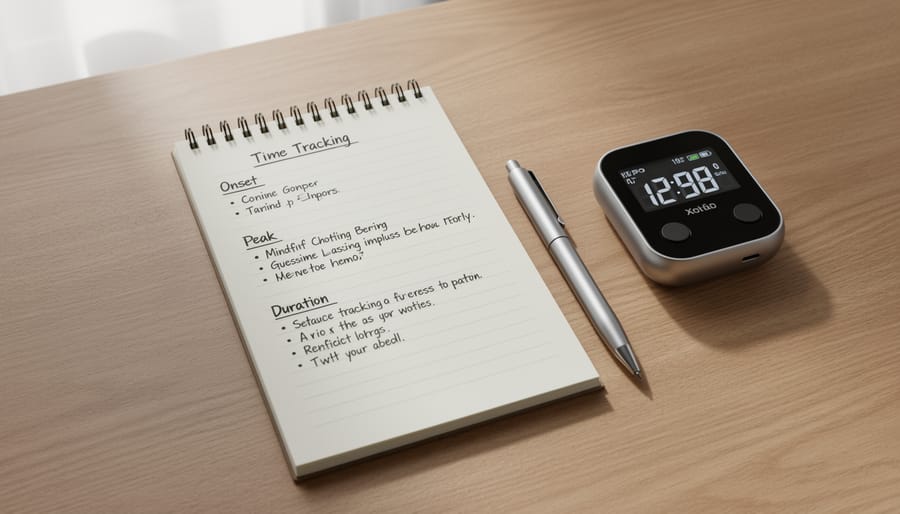
A journal or note app. Record the dose, time of ingestion, what you ate beforehand, and how you felt at 30-minute intervals. This log is your roadmap for future sessions and helps you spot patterns or adjust safely.
A trusted person (optional but recommended for first-timers). Let someone sober know what you’re doing and check in with them by text. If you feel anxious or disoriented, having a calm voice on the other end can be grounding.
- Lab-tested gummies with COA
- Timer or clock
- Journal or note app
- Safe, comfortable setting with no responsibilities
- Water and light snacks
- Trusted person on standby (optional but helpful)
Think of this checklist as your pre-flight check. Each item serves a purpose: the COA protects you from bad product, the timer protects you from impatience, the journal protects you from repeating mistakes, and the setting protects you from external stress. Dosing THC isn’t about restriction; it’s about creating the conditions where you can explore safely and learn what works for your body.
Understanding Hemp-Derived THC: Potency, Metabolism, and Why It Matters
Hemp-derived delta-9 THC is chemically identical to the THC extracted from traditional cannabis plants. The only difference is the source: hemp-derived THC comes from Cannabis sativa plants containing 0.3 percent or less THC by dry weight, the legal threshold under the 2018 U.S. Farm Bill. Canada uses a similar framework, permitting hemp with up to 0.3 percent THC in dried flower. Once extracted and concentrated into a gummy, the molecule behaves the same way in your body regardless of whether it started in hemp or a dispensary strain.
When you swallow a THC gummy, your digestive system breaks it down and absorbs the cannabinoids through the gut. The THC then travels to your liver, where enzymes convert a significant portion of it into 11-hydroxy-THC, a metabolite that crosses the blood-brain barrier more efficiently than smoked or vaped THC. This liver conversion is why edibles feel stronger and last longer than inhalation: 11-hydroxy-THC produces more pronounced psychoactive effects, and the whole process takes time.
Onset is slower than smoking because the THC must pass through your stomach and liver before reaching your bloodstream. Peak effects arrive hours later, not minutes. Duration is longer because your body metabolizes edibles gradually, releasing cannabinoids over an extended window. This pharmacokinetic profile is why the cardinal rule of edibles is “start low, go slow.”
Most hemp-derived THC gummies contain between 2.5 and 25 milligrams of THC per piece. A 2.5 to 5 milligram dose is appropriate for first-time users or those with no tolerance. Occasional users often find 5 to 10 milligrams effective. Experienced consumers may use 10 to 25 milligrams, but even veterans can overdo it if they stack doses too quickly.
Individual response varies widely. Body weight, metabolism, and prior cannabis exposure all influence how you feel. A 50-kilogram person with no tolerance will likely experience stronger effects from 5 milligrams than a 90-kilogram regular user. Genetic differences in liver enzymes mean some people metabolize THC quickly while others process it slowly. If you’ve never used cannabis, your endocannabinoid system has no acquired tolerance, so even small doses can produce intense effects. Conversely, daily users may need higher doses to feel anything, though this increases the risk of negative side effects and dependence over time.
Understanding these variables helps you dose intelligently. You can’t predict your exact response on paper, but knowing the pharmacokinetics and typical ranges gives you a safer starting point than guessing.
Safety Warnings and When Not to Use THC Gummies
Hemp-derived THC gummies are not appropriate for everyone. Before you start, you need to understand who should avoid these products entirely and who should proceed only with medical guidance.
Age Restrictions
You must be at least 18 years old in Canada or 21 in most U.S. states where hemp-derived THC gummies are legal. These age limits exist because THC exposure during adolescence can disrupt brain development, particularly in regions governing memory, decision-making, and impulse control. If you are under the legal age in your jurisdiction, do not use these products.
Pregnancy and Breastfeeding
If you are pregnant, planning to become pregnant, or breastfeeding, avoid THC gummies. THC crosses the placenta and appears in breast milk. Research links prenatal THC exposure to lower birth weight, preterm birth, and potential neurodevelopmental effects. No amount of THC has been proven safe during pregnancy or lactation.
Mental Health Considerations
Do not use THC gummies if you have a personal or close family history of psychosis, schizophrenia, or bipolar disorder. THC can trigger acute psychotic episodes in vulnerable individuals, and regular use may precipitate or worsen psychotic disorders in those at genetic risk. If you experience severe anxiety, panic disorder, or PTSD, consult a healthcare provider before trying THC products. While some people find low doses calming, others report intensified anxiety or paranoia, especially at higher doses.
Medication Interactions
THC can interact dangerously with several medication classes. If you take central nervous system depressants (benzodiazepines, opioids, alcohol, sleep aids), combining them with THC increases sedation, respiratory depression, and overdose risk. THC also affects cytochrome P450 enzymes in the liver, potentially altering blood levels of warfarin, clopidogrel, and other blood thinners, which raises bleeding risk. If you take prescription medications, review potential interactions with your doctor or pharmacist. Similar cautions apply to CBD oil safety as cannabinoids share metabolic pathways.
Driving and Operating Machinery
Never drive, operate heavy machinery, or perform safety-sensitive tasks for at least 8 hours after consuming a THC gummy. Edibles impair reaction time, coordination, and judgment for far longer than inhalation methods. Driving under the influence of THC is illegal across North America and significantly increases crash risk. Plan to stay home.
Legal Context in 2026
In the U.S., hemp-derived delta-9 THC gummies occupy a legal grey area. The 2018 Farm Bill legalized hemp extracts containing up to 0.3% THC by dry weight, but several states have since banned or restricted these products. Before purchasing or possessing THC gummies, verify your state’s current laws. In Canada, THC products (whether hemp- or cannabis-derived) are legal federally for adults 18+ (or 19+ in some provinces), but only when purchased from licensed retailers. Possession of unregulated or imported THC gummies may carry criminal penalties. If you live in a prohibitionist jurisdiction, possessing THC gummies can result in fines, arrest, and a criminal record.
Step-by-Step: How to Dose Hemp-Derived THC Gummies Safely

The safest path to using hemp-derived THC gummies is a structured, methodical approach that respects the compound’s delayed onset and long duration. Follow these eight steps every time you dose, especially if you’re new to edibles or have low tolerance.
- Verify the lab test (Certificate of Analysis). Before you consume anything, check the product’s COA, either printed on the package, available via QR code, or posted on the manufacturer’s website. Confirm the THC content matches the label (within a reasonable margin, typically ±10 percent) and that the batch passed tests for pesticides, heavy metals, and microbial contaminants. If no COA exists or the document looks vague, don’t use the product. This step protects you from mislabeled potency and harmful adulterants.
- Choose your starting dose based on experience. If you’ve never used THC or it’s been years, start with 2.5 to 5 mg. If you’ve used cannabis occasionally in the past six months, 5 to 10 mg is a reasonable entry point. Do not start higher. Individual metabolism, body weight, and liver enzyme activity create wide variation in response, and you can always take more next time, you cannot undo an excessive dose once it’s absorbed.
- Prepare your setting. Clear your schedule for at least eight hours. Choose a familiar, comfortable space where you feel safe and won’t be interrupted. Tell a trusted person what you’re doing and when you took the dose. Remove any responsibilities: no driving, childcare, work calls, or complex tasks. Have water, light snacks, and entertainment (music, a favourite show, a book) within reach. A calm environment reduces anxiety and lets you focus on the experience.
- Consume the gummy on a light stomach or after a small snack. An empty stomach may speed onset slightly, but it can also intensify effects unpredictably. A small, non-fatty snack (a piece of fruit, a few crackers) about 30 minutes before dosing balances absorption and comfort. Chew the gummy thoroughly and drink water. Note the exact time you swallowed it.
- Set a timer for 90 to 120 minutes and do not redose early. Edible THC must pass through your digestive system and liver before it reaches your brain as 11-hydroxy-THC, a process that takes 60 to 180 minutes depending on your metabolism and what you’ve eaten. Most people feel the first effects between 90 and 120 minutes. The single biggest dosing mistake is impatience: taking a second gummy at the 45-minute mark because “nothing’s happening” leads to an overwhelming experience two hours later. Wait 90 minutes at minimum, and ideally two hours, before concluding the dose isn’t working. If you still feel nothing after 150 minutes, make a note and adjust next time, do not stack doses in the same session.
- Observe and journal your effects. Once onset begins, pay attention to physical sensations (heart rate, muscle relaxation, coordination), mood shifts (euphoria, calm, anxiety), and perceptual changes (time dilation, sensory enhancement). Write down or voice-record what you notice: when effects started, when they peaked, how intense they felt on a scale of 1 to 10, and how long they lasted. This log is essential for refining your dose and recognizing patterns across sessions.
- Wait 24 to 48 hours before your next session. Edible THC’s effects can linger subtly, residual grogginess, mood changes, or slight cognitive fog, for 12 to 24 hours. Spacing sessions by at least a full day lets your system clear and prevents tolerance buildup. It also gives you time to reflect on the experience without the interference of overlapping doses.
- Adjust your dose by 2.5 mg increments only after 2 to 3 consistent trials. If your starting dose felt too mild across two or three separate sessions (not just one), increase by 2.5 mg and repeat the process. If it felt right, stay there. Never jump from 5 mg to 15 mg in one leap. Gradual titration is the cornerstone of safe edible use: it reveals your personal threshold without overshooting it.
This protocol isn’t about caution for its own sake. It’s about respecting the pharmacokinetics of edible THC and giving yourself the information you need to use these products confidently and sustainably. Skipping steps or rushing the process is how most negative experiences happen.
How to Know If Your Dose Is Right (and What to Do If It’s Too Much)

An appropriate dose feels manageable. You might notice a gentle warmth, mild euphoria, or a soft shift in perception, colors seem brighter, music more layered, your body relaxed but not sedated. You remain oriented to time and place, can carry on a conversation, and feel curious rather than anxious. This is the zone you’re aiming for: present, comfortable, and in control.
Overconsumption looks and feels different. Signs include intense anxiety or paranoia, rapid heart rate (tachycardia), nausea, dizziness, disorientation, difficulty concentrating, or a sense that time has stopped. You might feel trapped in your own thoughts or convinced something is terribly wrong. These effects are not dangerous in a medical sense, no one has died from a cannabis overdose, but they can be deeply uncomfortable and frightening.
If you’ve taken too much, the most important thing to know is that it will pass. THC’s effects peak around 2 to 4 hours after ingestion and taper over the next several hours. You are not in physical danger, even if it feels overwhelming.
Here’s what to do:
- Stay calm and remind yourself this is temporary, effects will fade in a few hours.
- Hydrate with water or herbal tea; sip slowly to ease nausea.
- Lie down in a safe, quiet space with dim lighting and minimal stimulation.
- Use CBD if you have it, research suggests CBD can blunt THC’s anxiogenic effects by modulating cannabinoid receptor activity.
- Contact a trusted friend or family member who can sit with you and provide reassurance.
- Seek medical help if you experience persistent chest pain, uncontrollable vomiting, or suicidal thoughts.
Evidence supports the calming effect of CBD and THC combinations: a 2013 study in the British Journal of Pharmacology found that CBD reduced anxiety provoked by THC in healthy volunteers, likely through serotonin receptor and cannabinoid receptor interactions. If you keep a CBD tincture or gummy on hand, taking 10 to 25 milligrams during acute distress may help smooth the rough edges.
Most importantly, don’t panic and don’t try to “push through” by staying active or ignoring your discomfort. Give yourself permission to rest, breathe slowly, and let time do its work. Your body will metabolize the THC, and you will return to baseline.
Frequently Asked Questions About Hemp-Derived THC Gummy Safety and Dosing
Can I cut a gummy in half to lower the dose?
Yes, if the THC is evenly distributed throughout the gummy. Check the certificate of analysis and user reviews to assess whether the manufacturer produces homogeneous products, some gummies have hot spots where THC concentrates unevenly, making half-doses unreliable.
How long do effects last?
Typical duration is six to eight hours, though high doses or slow metabolizers may experience effects for up to twelve hours. Understanding how long edibles last helps you plan your schedule and avoid responsibilities during the active window.
Can I use THC gummies every day?
Daily use rapidly builds tolerance, reducing effects and increasing the risk of dependence. Without medical supervision, daily consumption is not recommended, spacing sessions by at least 48 hours helps maintain sensitivity and reduces habit formation.
Are hemp-derived gummies the same as dispensary edibles?
The delta-9 THC molecule is identical whether extracted from hemp or cannabis, so the pharmacological effects are the same. The difference lies in regulatory oversight: dispensary products in legal markets undergo stricter testing and labeling requirements than many hemp-derived products sold online or in retail stores.
What if I don’t feel anything after two hours?
Wait at least another hour before concluding the dose was insufficient, onset varies widely based on stomach contents, metabolism, and individual physiology. Never stack doses within the same session, as delayed absorption can cause unexpectedly intense effects hours later.
Do these gummies show up on a drug test?
Yes. Standard drug screens detect THC metabolites regardless of whether the THC came from hemp or cannabis, and a single 5 mg dose can trigger a positive result for days or weeks depending on frequency of use and test sensitivity.
These questions reflect the most common concerns among first-time users and highlight the practical realities of edible THC consumption. The variability in onset time surprises many newcomers who expect predictable timing like alcohol or inhaled cannabis. Metabolism, recent meals, and even gut microbiome composition influence how quickly your liver converts delta-9 THC into the more potent 11-hydroxy-THC that produces edible effects.
Cutting gummies works only when manufacturers mix THC extract thoroughly into the entire batch. Some budget products skip this step, resulting in some gummies with 15 mg and others with 2 mg despite identical labeling. A reputable certificate of analysis from an ISO-accredited lab, along with consistent user reviews mentioning predictable effects, signals better quality control.
For employment, legal proceedings, or athletic testing, assume any THC gummy will compromise your results. Metabolites store in fat tissue and release slowly, so infrequent users may test positive for a week while regular consumers can show metabolites for 30 days or longer after stopping.
Safe, intentional use of hemp-derived THC gummies comes down to four principles: verify, start low, go slow, and know your limits. Before you consume anything, confirm your product has a certificate of analysis showing THC content and contaminant screening. Begin with 2.5 to 5 mg if you’re new to cannabis or have low tolerance. Wait a full 90 to 120 minutes before considering another dose, and make adjustments only after two or three consistent sessions, small increments of 2.5 mg at a time. Track your experiences in a journal so you can identify patterns and refine your approach over time.
This process requires patience, but it works. The discomfort and risks associated with THC come almost entirely from taking too much, too fast, in unsafe settings. When you respect the pharmacokinetics of edibles and prepare thoughtfully, you create space for a manageable, even beneficial, experience.
Before your next session, take three actions. First, research your local laws, hemp-derived THC occupies a legal gray zone in many places, and enforcement varies. Second, source products from transparent vendors who publish third-party lab results; Health Canada’s cannabis guidance and similar regulatory resources can help you assess quality standards. Third, if you have underlying health conditions or take prescription medications, consult a healthcare provider to rule out contraindications.
Understanding how THC vs other drugs compares in terms of safety profile and dosing curves can also deepen your harm-reduction toolkit. For more on cannabinoids, mental wellness, and evidence-based approaches to psychoactive substances, explore the related guides and research summaries here at Mushroom Masters.